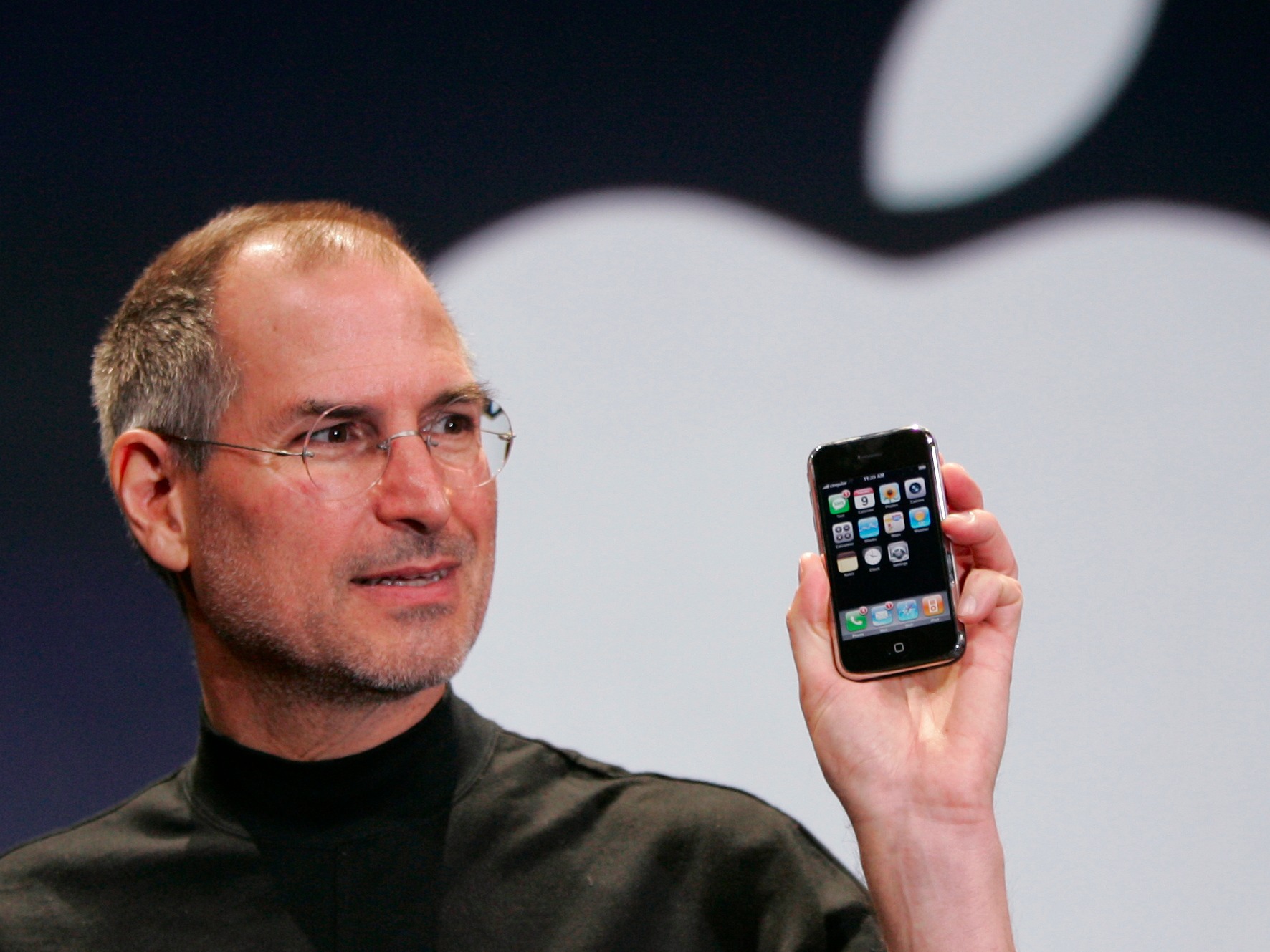
The setting was Macworld San Francisco (Moscone Convention Center) where Steve Jobs presented the opening keynote (initially going over Apple’s progress with the iPod and iTunes Music Store). Before there was even a definitive name for the product, the rumors of some kind of “gee whiz” mobile media playing device had long been making the rounds since 1999 when Apple acquired the iphone.org domain on December 14, 1999. Myself (in 1999), I was working in Apple’s enterprise division (aka, the non sexy part of the product line) with the server related products (OS X Server, Xserve, Xsan, etc). As noted before, lot of product development is kept under very tight wraps on a NTKB (“need to know basis”) where only the executive leadership (within JObs inner circle) were privy to the details.
In retrospect, a lot of these pieces of OS X/OS X Server were used in the R&D for what eventually became the iPhone (and as Jobs later revealed, the development of the iPad is what they had originally started with before shifting to the downsized form factor for the iPhone). As for the rumor mill, it ranged from something like a media player set top box (taking inspiration from the Pippin) to a Jobs version of a PDA, and a portable media player. It seemed far fetched in 1999 that Apple would be seriously making a mobile phone.
Fast forward to October 2001 when the click-wheel iPod was released, and we got this new type of user interface navigation (as well as this confirmation that one of the earlier rumors of a portable media player coming to fruition). It would be several years before the iPod really would make a huge dent in the MP3 player market which at the time, Creative Labs had been one of the major dominate companies in that space (while Sony had long been this global consumer electronics giant). This explosive growth (of the iPod) happened with Apple released iTunes for Windows AND a much better integrated iTunes Music Store in 2003 that sent the device on this trajectory that fueled Apple’s revenues and provided them the foundation (of capital) to begin expanding their product portfolio (and the associated R&D involved with those secretive projects).
The years preceding Macworld San Francisco 2007, did have the rumor mill working overtime with what an Apple mobile phone might be like. In 2005, Apple (in partnership with Motorola), released the iTunes Phone (a rebranded ROKR E1 that made many wonder what was going through the executives heads to even go through with an atrocity like this).
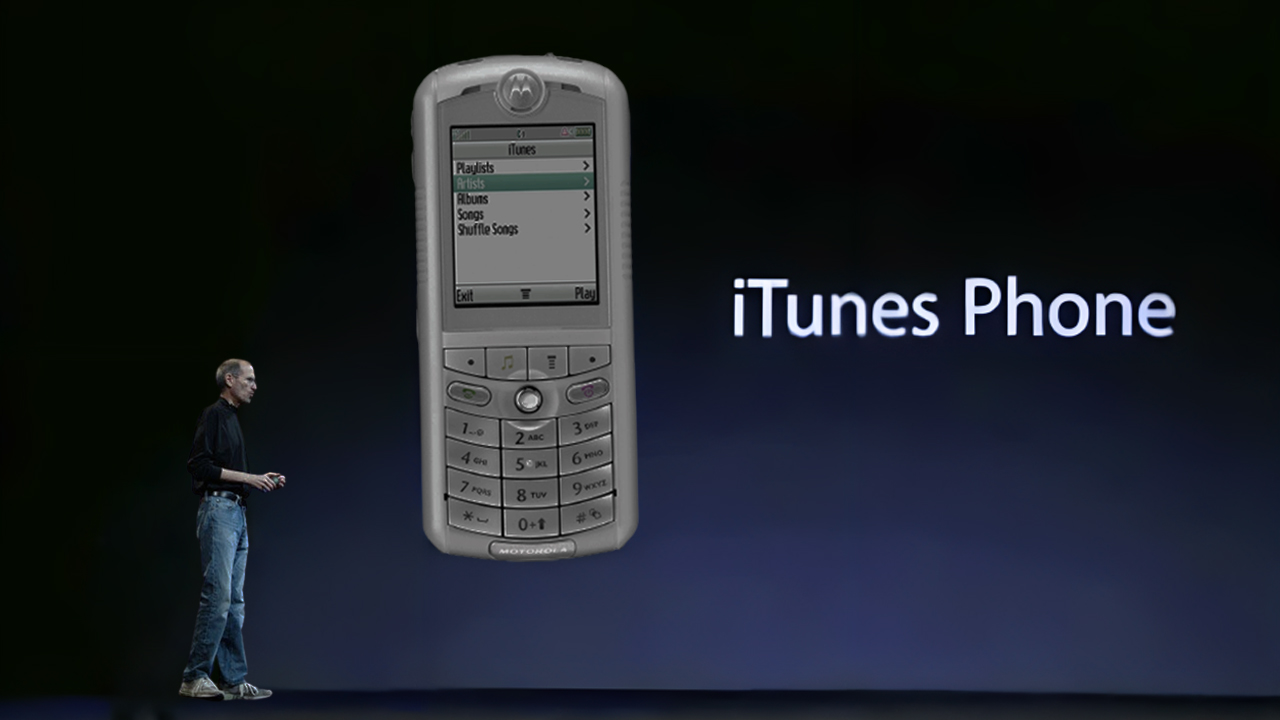
But this in retrospect also highlighted the rationale for what did become the iPhone (where the company designed the entire widget with the hardware and software in tandem; something Apple also learned when iTunes was originally Mac only and they initially made a deal to use Music Match Jukebox (as the music organizing application) for the Windows version of the iPod. This is what led to this pervasive mindset of controlling as much of the design and user experience as possible (which is what also led to the App Store ecosystem; something that Jobs ironically had been originally very adamant against for the iPhone/iPhoneOS; the initial versions did not have a public SDK until Jobs finally caved. Until that SDK finally arrived, only Apple could write native binaries while everyone else had to rely on web based applets). But I digress…
In 2006, Apple had also trademarked the term “Mobile Me” and many thought this was going to become the rumored Apple mobile phone because of how the filing was described. But no one really had any idea of what the thing was actually going to be like. Remember in that timeframe, smartphones were bulky devices that had these tiny buttons/keyboards at the bottom. Touch screen devices existed but were still mainly these larger prototype surfaces while smaller form factors tended to have capacitive screens that were ok for pressing with your finger, but not great for gesture based input (like multitouch).
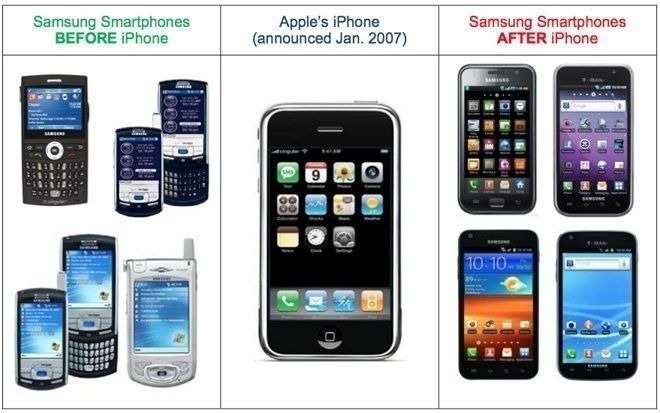
The above illustrates how post iPhone, smartphones made this leap from the ones on the left, to what has been the norm since then on the right. And Apple deserves a lot of credit for opening up this possibility sooner rather than later. While I understand the reasons for why many longtime haters of Apple have tried to dismiss the influence that the iPhone has had with changing how our phones now work, that announcement in January 2007 did in-fact make a huge impact. Maybe some of the other parts (like social media/their algorithms and its negative impacts) haven’t been as great, but no one can deny the user experience is a leap over those smartphones that existed prior to the iPhone.
I occasionally re-watch that part of the keynote since this also caused me to make additional investments (completely new positions in “back up the truck” fashion) because what I saw was not just a mobile phone, but an actual portable computing device that just happened to have telephony capabilities. He also really “sandbagged” the 1 year marketshare “guidance” they wanted to try to achieve; 1% or 10 million units by 2008. And when Jobs made note that its operating system was based on OS X (something I worked heavily with on the OS X Server side since 1997), that part reminded me of the portable nature of the underlying parts of the operating system and how it could become the foundation for so many more different products (and one couldn’t help but think at the time how this iPhone could be enlarged into a larger tablet; which as noted before, was where the iPhone started in its product development cycle).
The demo seems like “what’s the big deal” when it is just standard fare today. But context… back then, the mobile phone and portable e-mail/browsing experience was terrible and nothing like what we now take for granted today. It was a gigantic leap in usability; one that neither Google or Microsoft would’ve done a good job without this initial template, while none of the already established players (like Motorola, Nokia, Ericsson, etc) were even willing to tackle. People often times forget that Jobs admired Sony’s co-founder Morita Akio and the consumer electronics hardware they created (but he had also made it no secret that the user interface side was often times lacking), and had long been deeply immersed in Buddhist/Zen/Japanese culture (why he had this pursuit of a minimalist interface/controls).
Today, many of Apple’s products are powered by this same core operating system lineage (just with appropriate frameworks for the I/O and user interface adapted for the form factor); Apple TV and Apple Watch being the other notable ones besides the iPad (and iPhone plus Mac). These additional investments (besides the ones I originally had along with the ESOP’s and RSU’s from my time with the company), set me up for financial independence (allowing me to early retire a decade ago even though much of that has still been unrealized gains; something which I am now finally executing on with this long planned exit strategy). Thus this announcement is something I have a continuous connection to (one that I also acknowledged could’ve also turned out differently if Microsoft had not dismissed the product the way they did with then CEO Steve Ballmer laughing at it and then a few years later, holding a mock funeral for the iPhone/Blackberry when they released Windows Phone 7).
But this is life in a nutshell where those series of events can play out and have the outcomes they do based on the decisions that people make. This is also why I’ve long viewed these old platform wars as “detrimental” because at the end of the day, they are tools. It’s like how I dislike A.I. (but that is more with how it is being hyped and promoted as the solution to everything), but acknowledge it is a useful tool in many areas (like I use machine learning tools and local models for audio, photo, and video related tasks). It is not perfect nor something that should be used to replace as much human workers all for the sake of corporate profits (which again is where I take issues with how it is promoted).
Similarly, I’ve used multiple platforms (and moved back to being dual platform for computers a decade ago as well). And while on the mobile side, I’ve been iOS, I’m picking up my first Android smartphone device (a Samsung S25 Ultra) which I plan to use not only for testing, but to just have an alternative option. I’ve long written about my dislike for how Android came to be (former Google CEO Eric Schmidt sat on Apple’s board of directors and had direct insider knowledge about the iPhone; he thus earned the nickname “weasel” for using that knowledge to quickly have Android revamped the way that it was).
While I do owe a lot to Apple on many fronts, I’ve also long been aware of being too much of a proponent of a singular company as well as the pitfalls of being ensconced in this “hatred of a platform” mindset by being so dead set against any solution from these competing platforms (just because they just dislike the company). I mean I also dislike Google (and have made it a point about de-Googling), but I realize it’s not possible to be completely free from their reach (YouTube being a prime example). This is different from non-essential companies (for me) like Meta though where everything they do can be chucked out the window because I have no need to use any of it. And this is why I made a cognizant decision to keep Apple’s iCloud ecosystem at arms length (and well, not being reliant on cloud services at all).
At this point in our current timeline, NONE of these corporations and their executive leadership are saints (I now view them all through the same prism). It’s also why I look back at these old announcements with some fondness because they were still from much simpler times when it wasn’t a race to the bottom of the ethics/morals pile.