For the longest time, I had a difficult time deciding how to approach this particular writeup (initially, it was supposed to be about reviewing his chocolates). But it wouldn’t be doing justice to the artisan who is responsible for creating them (thus this expanded writeup).
Bob (who goes by the nickname Choclatbob on the streaming platform Twitch), is someone who I met on that platform as a fellow viewer. I learned over time that he is someone who has had been all over the world (backpacking, sailing, and living in various countries), has run his own successful businesses, and has a knack of creating things with his hands. In short, someone who is a craftsman/artisan that is very wealthy from a (global) life experiences perspective.
It always makes me feel fortunate that I’ve had the opportunity to encounter individuals like this by various chance opportunities. Or as I’ve written numerous times, “ichi-go ichi-e” moments (which is one of my favorite Japanese idioms; (一期一会) or “one time/place, one meeting”. Like many Japanese idioms, its literal translation to English doesn’t fully convey the situational cultural context which ends up giving the phrase a much more deeper meaning.
It is occasionally expanded to “once in a lifetime” but in the Japanese social/cultural context, it’s meant to treasure these moments that may happen by chance (the human abstraction of life and time is basically this; a series of events where you may have both arranged and random encounters with associated opportunities, each with their own outcomes) since those moments may likely never happen exactly again in the future. One’s personal relationships and experiences are thus forged by these encounters and outcomes (sometimes you will be on the same wavelength and other times, not at all).
In this particular case, I had this chance encounter with Bob on Twitch because I happened to resume using it in January 2024, where he also happened to be a viewer/community member of a Japanese streamer that I also followed.
But it is the part of his online alias (chocolate) that intrigued me because I’m a huge connoisseur of chocolate; specifically dark chocolate. And even more specifically, hand made dark chocolate where the flavor and textures have these very subtle differences (where once you start consuming the good stuff, makes going back to anything else difficult).
Background
I have to provide a brief background as to how premium chocolates became a thing for me (my notion of chocolates before that was Hershey, Mars, Nestle, Ghirardelli, Godiva, etc. Growing up, I remember that black and white checkered motif of See’s Candies that existed all over California (and other parts of the U.S.) and for years, that was the high bar for me when it came to high quality chocolate (in hindsight, that is sugar loaded chocolate from who knows where the cacao came from).
It wasn’t until maybe 10 years ago, that I learned about Minimal in Tokyo. It was a moment of epiphany as far as the world of chocolate goes. It was this simple (by subtraction) bean to bar philosophy of highlighting the flavor of cacao; it was a zen like equivalent for chocolate making where I became better informed as to what actual good quality chocolate tasted like. I later learned unsurprisingly how there are many artisan level chocolate makers throughout Japan like Es Koyama in Hyogo, Green Bean to Bar Chocolate (previously in Tokyo but now in Fukuoka), Le Chocolat De H in Tokyo, and a host of other makers. It was through this avenue that I learned about, and tried some of this other handmade chocolate (again, mostly the dark chocolate variety from 70%-85%).
Hawai’i itself has a small but growing niche of both cacao growers and chocolate makers. From my general understanding, it has been several decades in the making especially once both pineapple and sugar cane production scaled down (where all of that fertile agricultural land was now available for other crops that were suitable for this type of climate). Cacao does not grow well in most parts of the United States except in Hawai’i, where farms now exist on the Big Island (on properly irrigated volcanic soil) and on O’ahu on agriculture land that once used to have both pineapple and sugar (the fertile central plain areas of Kunia, Wahiawa, and Waialua). And there are several bean to bar chocolate makers that have gone into business by focusing on quality over quantity.
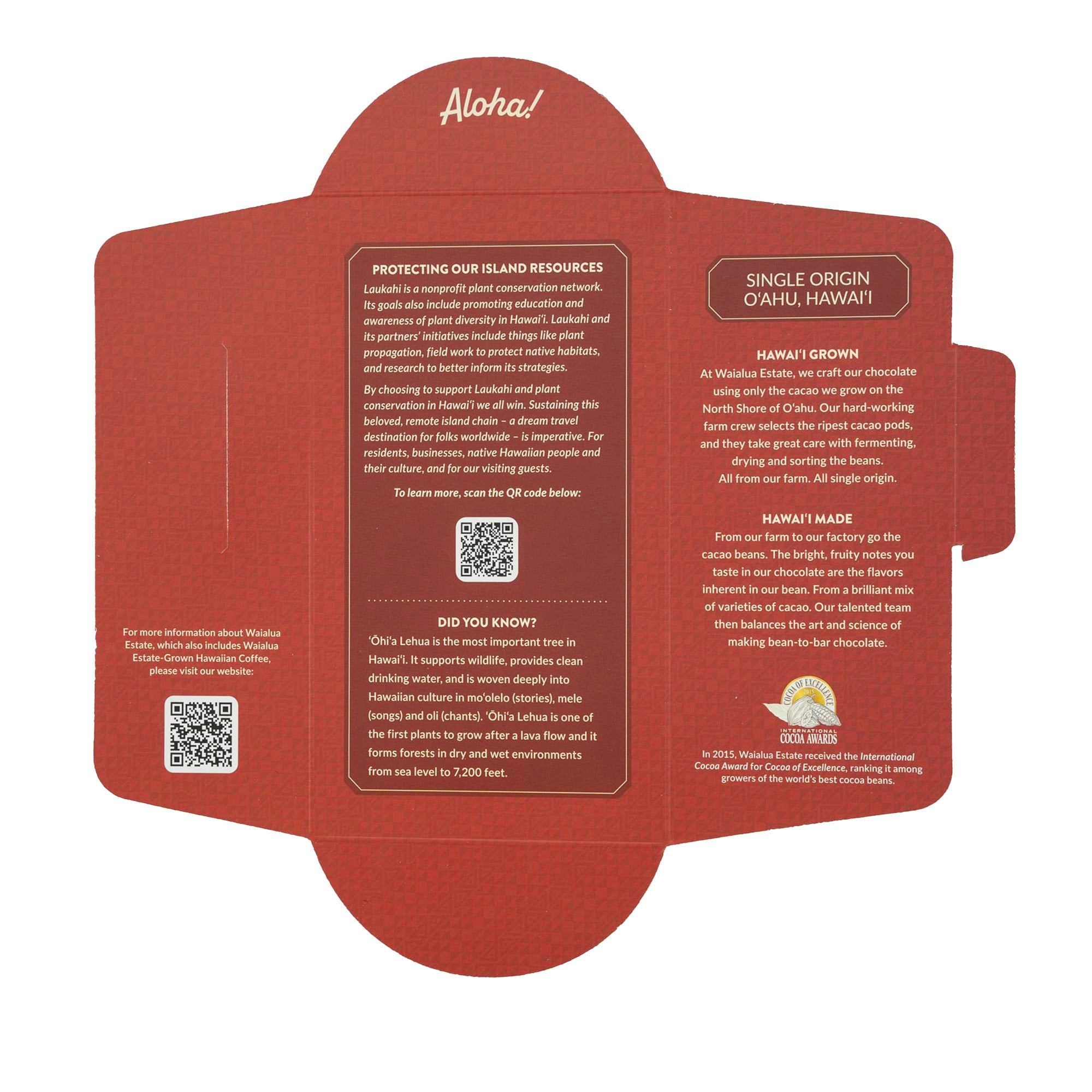
Even a major corporation like Dole Foods (which owns a lot of land previously dedicated to pineapple) got in on the act where they created a brand named Waialua Estate that took their own Hawai’i grown cacao (from the North Shore area), and produced them into gourmet chocolate (though on the chocolate making side, is not completely handmade since they make this at their converted pineapple cannery that exists near downtown Honolulu). It’s still better than the completely mass produced chocolates though.
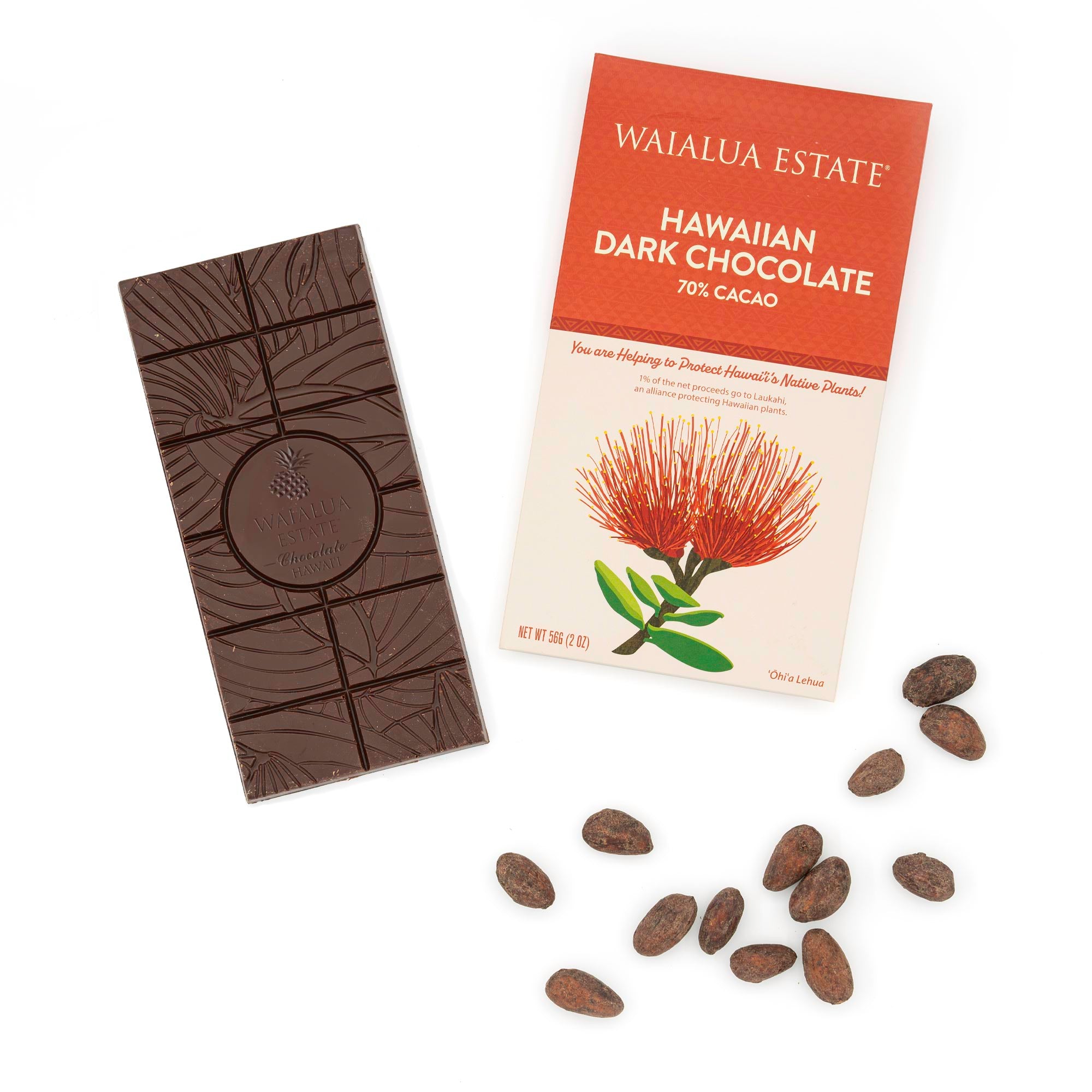
There is a shop in Manoa Valley called Choco l’ea that hand makes chocolate creations using a combination of local ingredients (with chocolate sourced locally and from Europe). It’s great from an artisan perspective in terms of chocolatier confectionaries, but I was also looking for the ultimate combination of locally Hawaiian grown cacao and dark chocolate being made with just cacao, cane sugar, and cocoa butter (with all the necessary scientific understanding of blending it all together). And that turned out to be Manoa Chocolate (in operation since 2010).
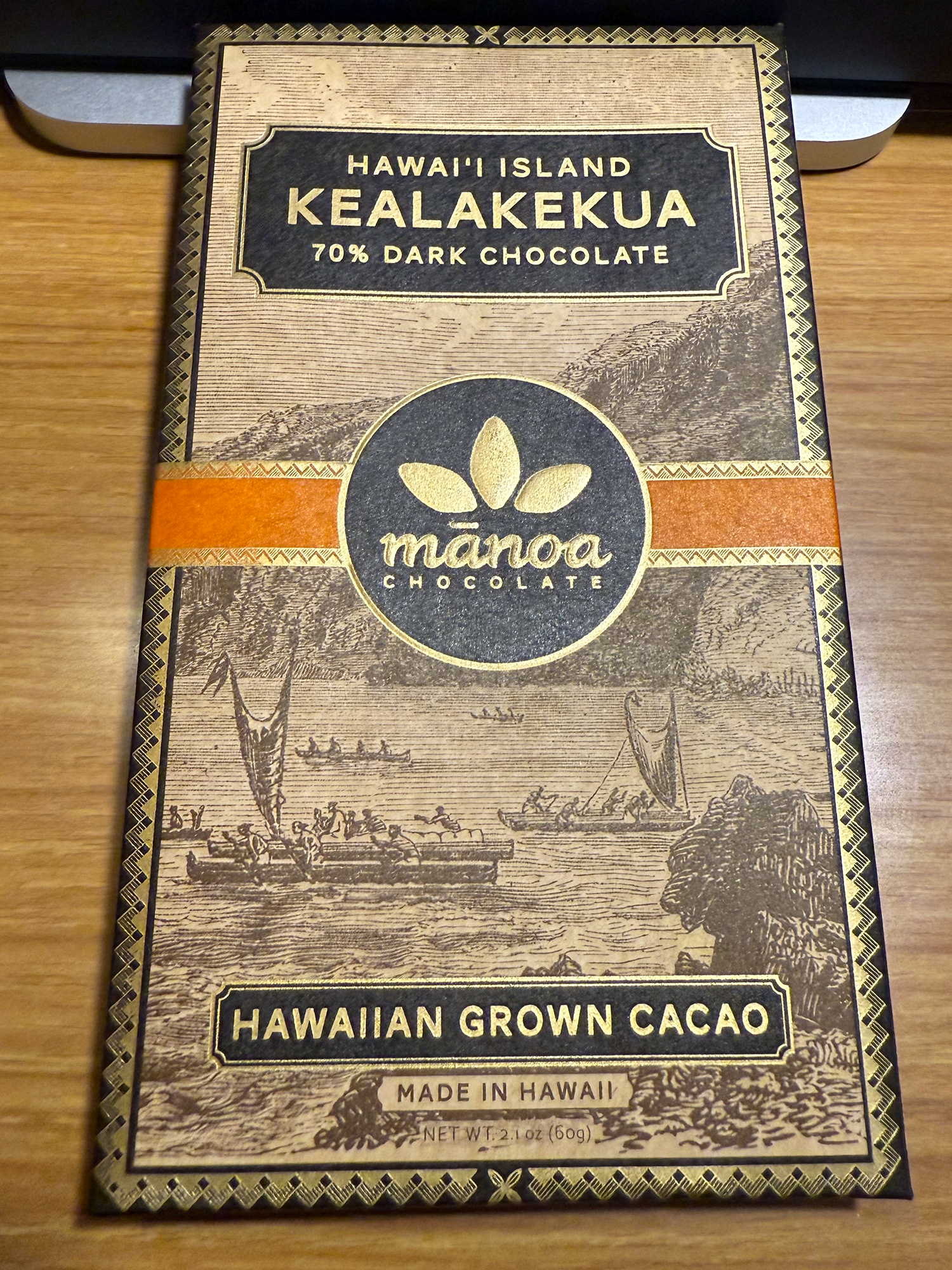
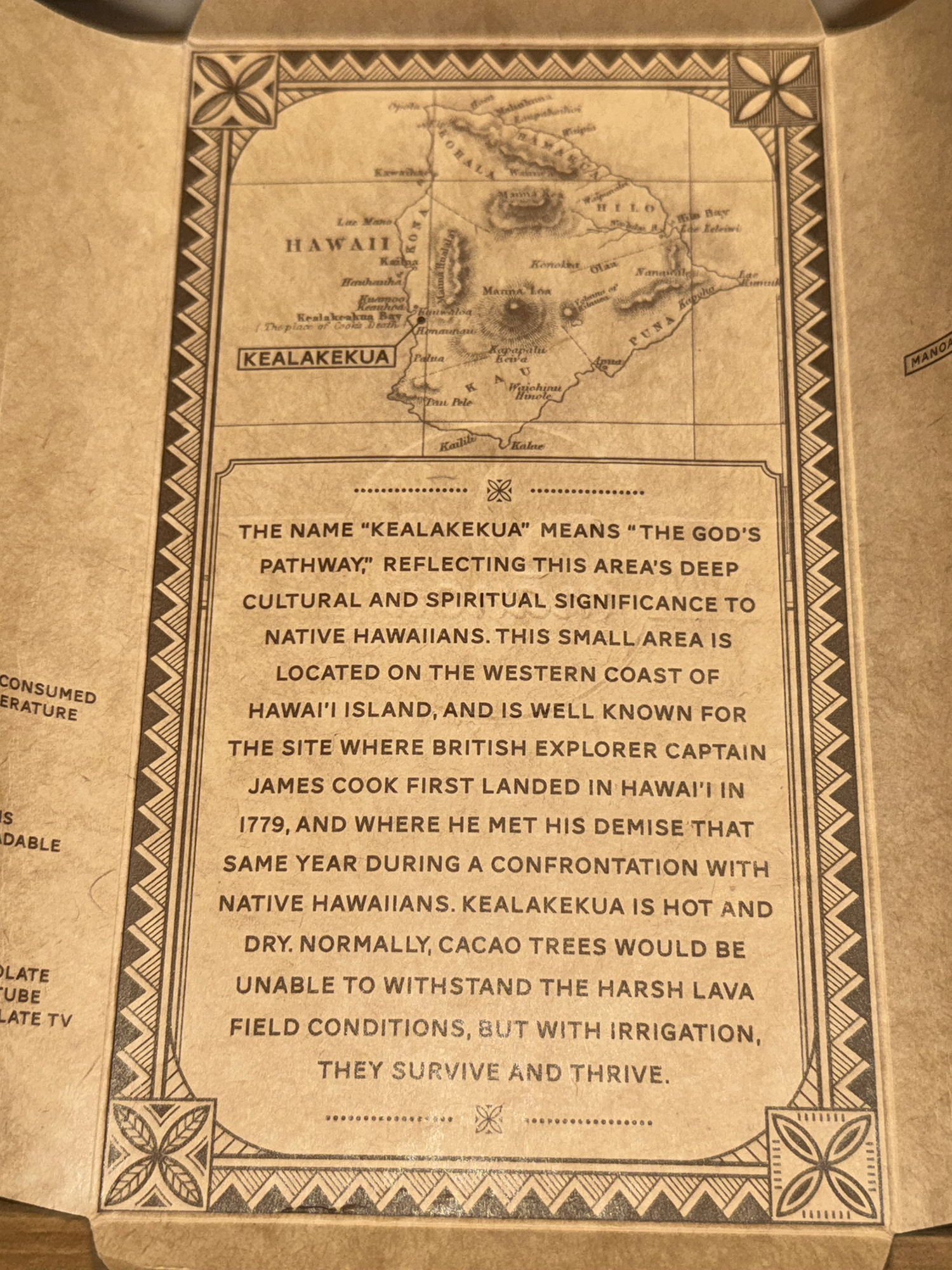
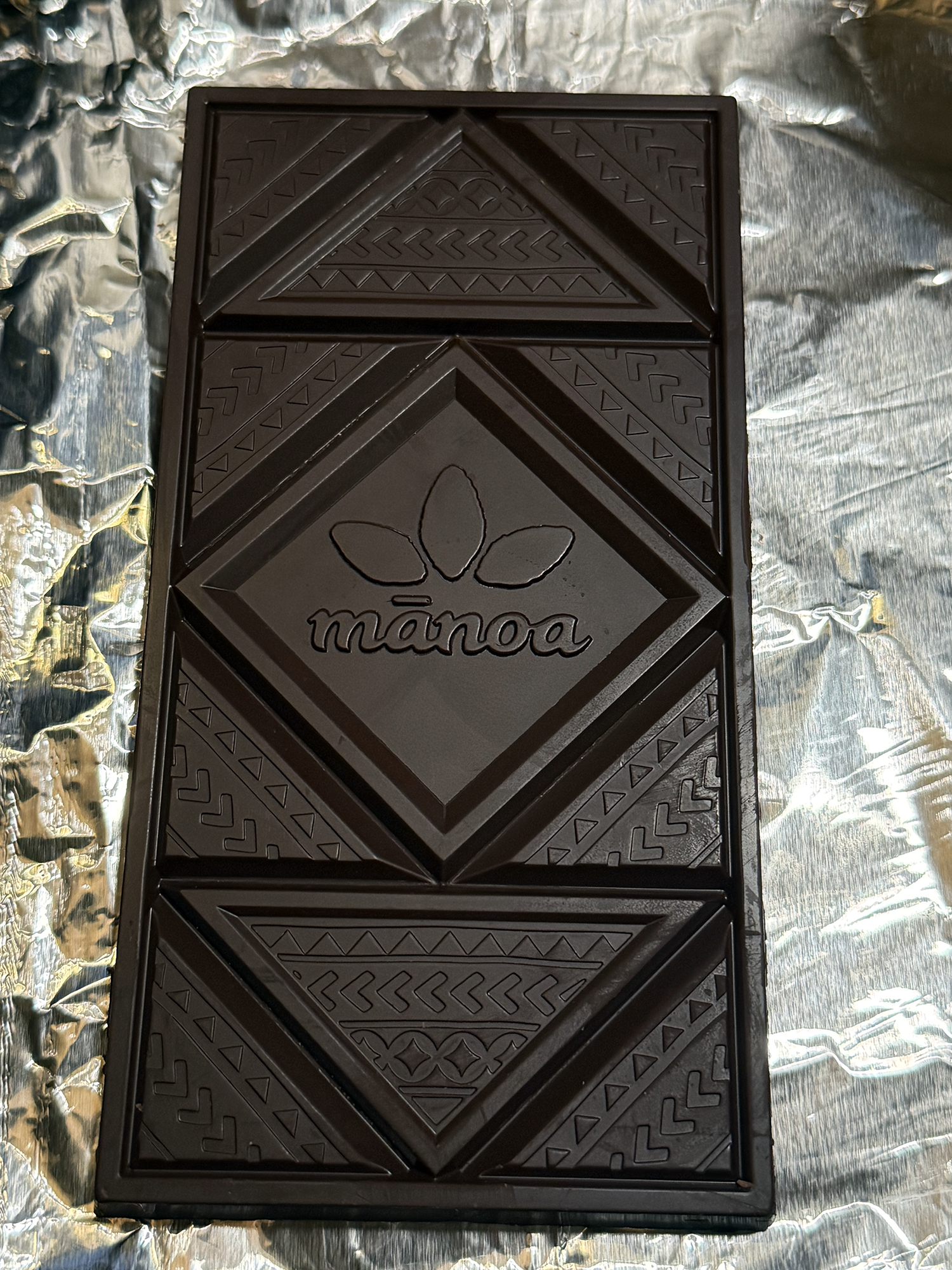
I didn’t really know about them until I relocated here. But they had long made headways into the travel industry market since they sold their chocolate bars in various tourist heavy spots like Ala Moana (Shopping Center), Waikiki, and Haleiwa. Myself, I’ve only tried their 70% dark chocolate varieties (some of the Oahu grown ones are difficult to get unless you go to their factory/shop in Kailua). Those are named for the location of where the cacao was grown. My favorite is probably the Kealakekua (the volcanic rich soil plus the higher elevation areas like Holualoa in that section of the Big Island is also why Kona coffee produces the sort of beans it does). The cacao grown on the Hamakua coast of the Big Island called Ninole (not listed in the above), has this fruity cherry undertone to it which makes it my next favorite.
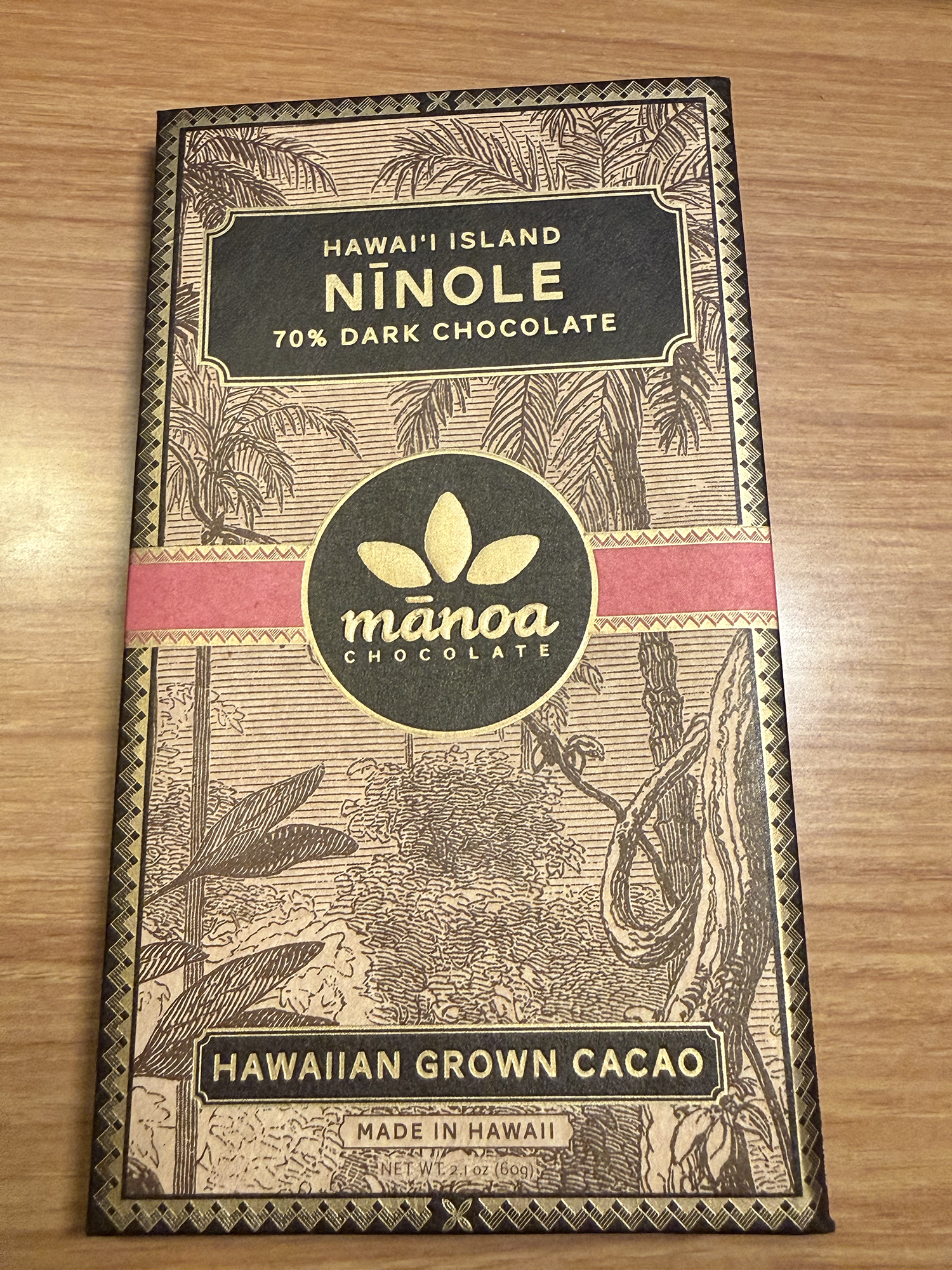
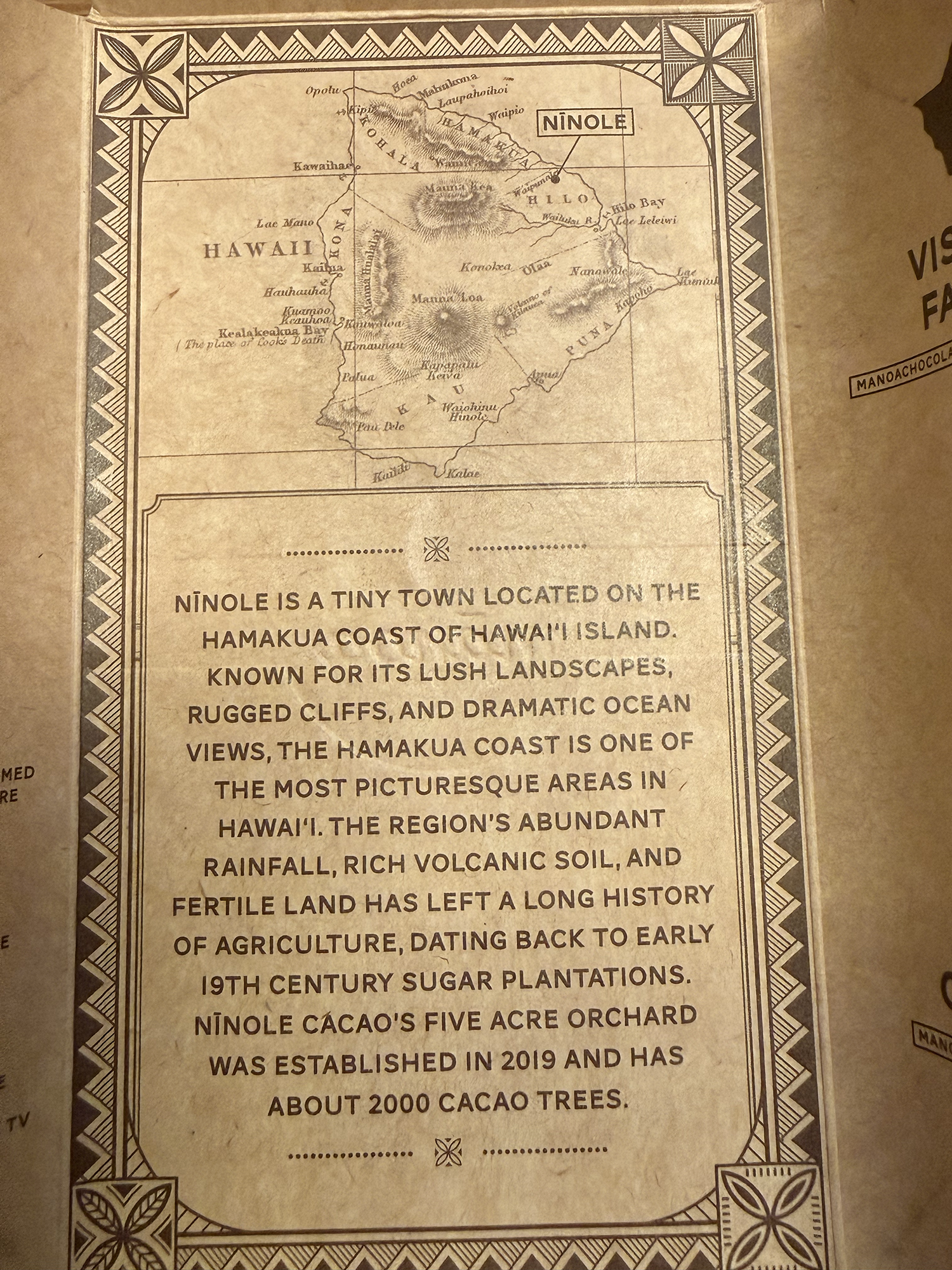
The bar design is simple but incorporates some Hawaiian motifs. The triangle shape in Hawaiian culture is known as “maka ihe”. This symbolizes the tip of a spear representing both life and death, a duty to protect and provide, and can also reflect one’s community identity (in short, it symbolizes strength, protection, and ancestral connection). And in 3’s, can symbolize balance, harmony and unity. Thoughtful symbolism such as this is something I always enjoy seeing and learning about.
Brief tangent: I had this similar thing happen to me with coffee; really good coffee that is sourced and processed by hand (one of them was this coffee from Antigua) with each batch of green coffee beans roasted to perfection. The coffee (whole beans, ground beans, prepared drinks) sold at places like Starbucks, Seattle’s Best, etc, are (I’m sorry to say), some of the worst tasting coffee around. And I later learned more about high quality extra fancy roasted Kona Coffee including actual hands on experience with the process (another article that has long been in this draft form long before Sugai Kona Coffee in Holualoa on the Big Island of Hawai’i, disappeared during the COVID shutdown). I also learned I had relatives via marriage who had small Kona coffee farms and one of them runs a long time shop in Kailua Kona. But I’ll leave it at that for now since this is supposed to be about Bob’s chocolates.
The chocolate maker
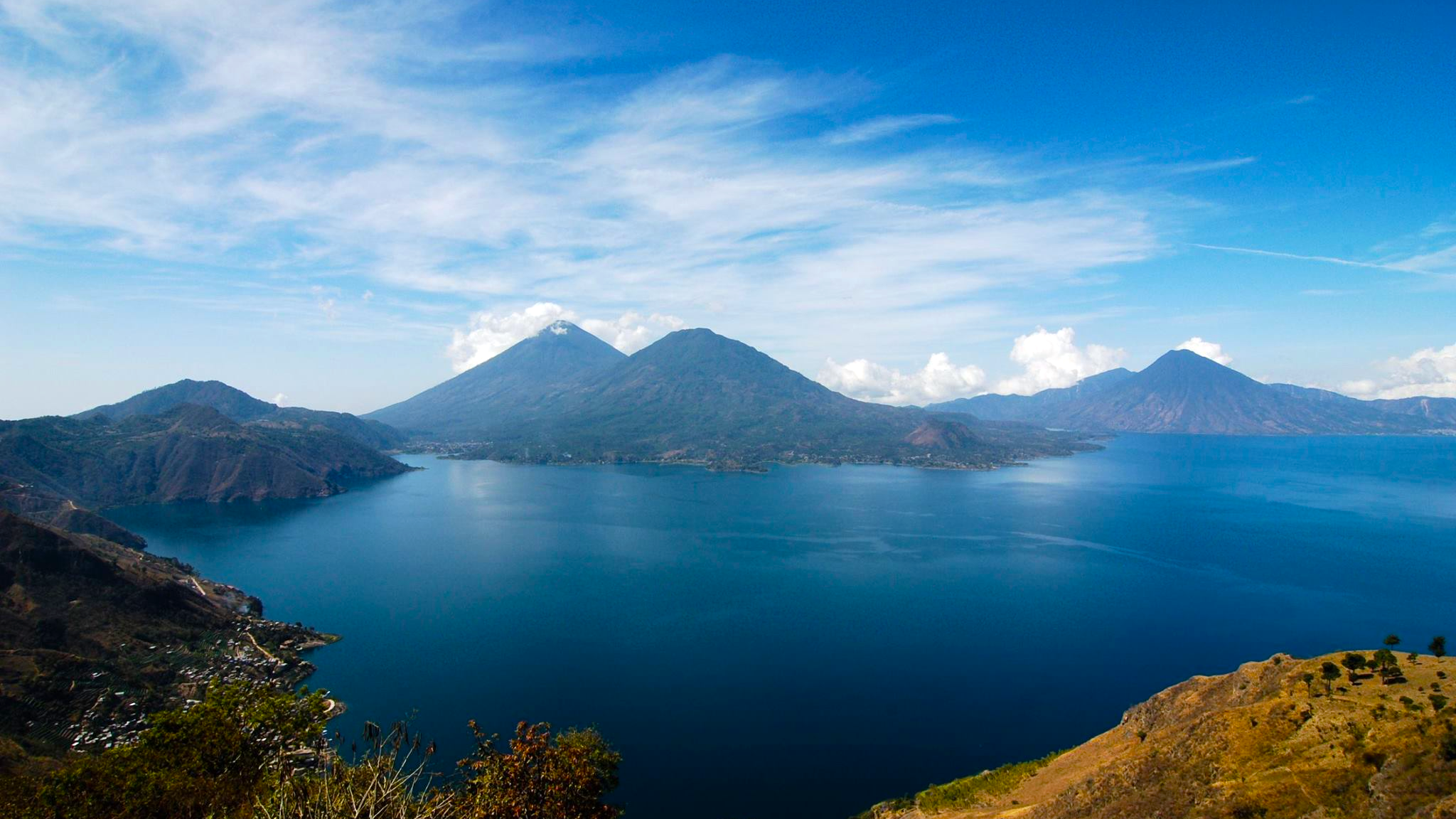
Bob is formerly from the U.S. but eventually settled in western Guatemala close to Panajachel near a very picturesque lake (Lake Atitlán) with gorgeous views of multiple volcanic peaks, and has been busy setting up his shop and “laboratory” where he makes some of his creations of handmade chocolates, ice cream, foods (he is also an experienced chef), and a bunch of other things I’m probably not aware of. I recall that he also holds classes about cacao production/making chocolates while maintaining this “socially responsible”/self-empowerment aspect to what they do (which anyone who has read my blog entries regarding Wall Street and investing, knows that I am strong proponent of when it comes to shareholder ROI initiatives also being employee/socially/environmentally responsible). Note: Lot of this background info is coming from memory (from chats in various streams, Discord posts, or from the few times he has streamed) where some of it might be incorrect (age doing its thing).
He’s been also wanting to stream some of this but hasn’t had the time to do so while busy standing up that shop. He did manage to a few times; I caught two of those (one in November 2024 where he was showing how he created the coconut shavings used in some of his creations, and then in March 2025 [below] when he was making some chocolate truffles and covering some of the process of making that chocolate). The reason I saved this VOD was because of the other side topics he talked about.
I recall Bob mentioning his past experiences traveling around the world and being involved in other crafts including bead making (some of it in this VOD). There’s also the part that aligns with much of my own thinking; this aspect of “giving back”. Bob has run his businesses and life this way (cooperation versus competition). I was similarly doing that (volunteering) once I early retired a few years after the 2011 Great East Japan quake/tsunami. He’s also seen nature take away a lot of what he built up in the past (Hurricane Stan two decades ago), and has been rebuilding/trying to get back on track (with other world events getting in the way including COVID a few years ago).
This is the reality of life with its ups and down. How we personally respond to adversity defines our personal character. IMHO, some of this gets transferred into the quality of his chocolates. Bob’s personal life experiences are perfect subject material for being a content creator in some form (whether it be blogging, vlogging, streaming, podcasting or a combination of these) because there is so much of it to offer that younger people can learn from; where one person can help make life better for others. Or as Steve Jobs once mentioned, “We’re here to put a dent in the universe. Otherwise why else even be here?”
Years of hands on experience doing something like this results in part of that process becoming second nature (molded also by other life experiences).
Ixcacao
What is the name of this chocolate company and how can you buy this chocolate? The company name is Ixcacao and purchasing them from outside Guatemala is the challenging part. As Bob had explained to me, the postal system there is not really stable (corruption is rife with those who operate it). Similarly, other forms of supply chain logistics in the area remains challenging which naturally creates issues with an efficient distribution network (it usually requires going with a private shipper like DHL, FedEx, or UPS that services a main hub city like Guatemala City). And unless he ships in bulk, it can end up being expensive. Plus it is a perishable. Some places (which sell chocolate direct) use a cold packing method utilizing dry ice (this of course has to be done in a way so as to not actually over chill/freeze the chocolate) that obviously isn’t viable for low volume shipping.
I was fortunate to be able to try some of his creations for the first time last summer when he had a volunteer (Sydney) who was returning from her trip. She was able to bring back several bars, a box of chocolate truffles, and two bags of chocolate dipped orange peels which I sampled. It was several weeks after our initial scheduled time to meet since I came down with something (we finally met in late July). I thought she had known him but as I learned when we talked for a bit, that she and her friend(s) were just traveling and came upon Bob and his shop. She herself had relocated to Hawai’i from California (Santa Cruz which is south of Santa Clara/San Jose where I used to live). I bring this up to highlight how small the world can be at times.
One of the places he had lived in the past was on Maui island so it is easy to get into a conversation just based on that. I’ve learned how gracious Bob is such that it didn’t surprise me that he offered them lodging/a chance to learn about what he was doing. He asked if she would be willing to bring some chocolate back with her when she returned (being very cognizant of the limited space she had). I offered to reimburse Bob and he refused stating that “chocolates are best shared with others who he knows would enjoy them”. Imagine how much better the world would be, if those that are powerful/well connected enough, looked at things in this same way. But I digress…
The Chocolates + “Review”
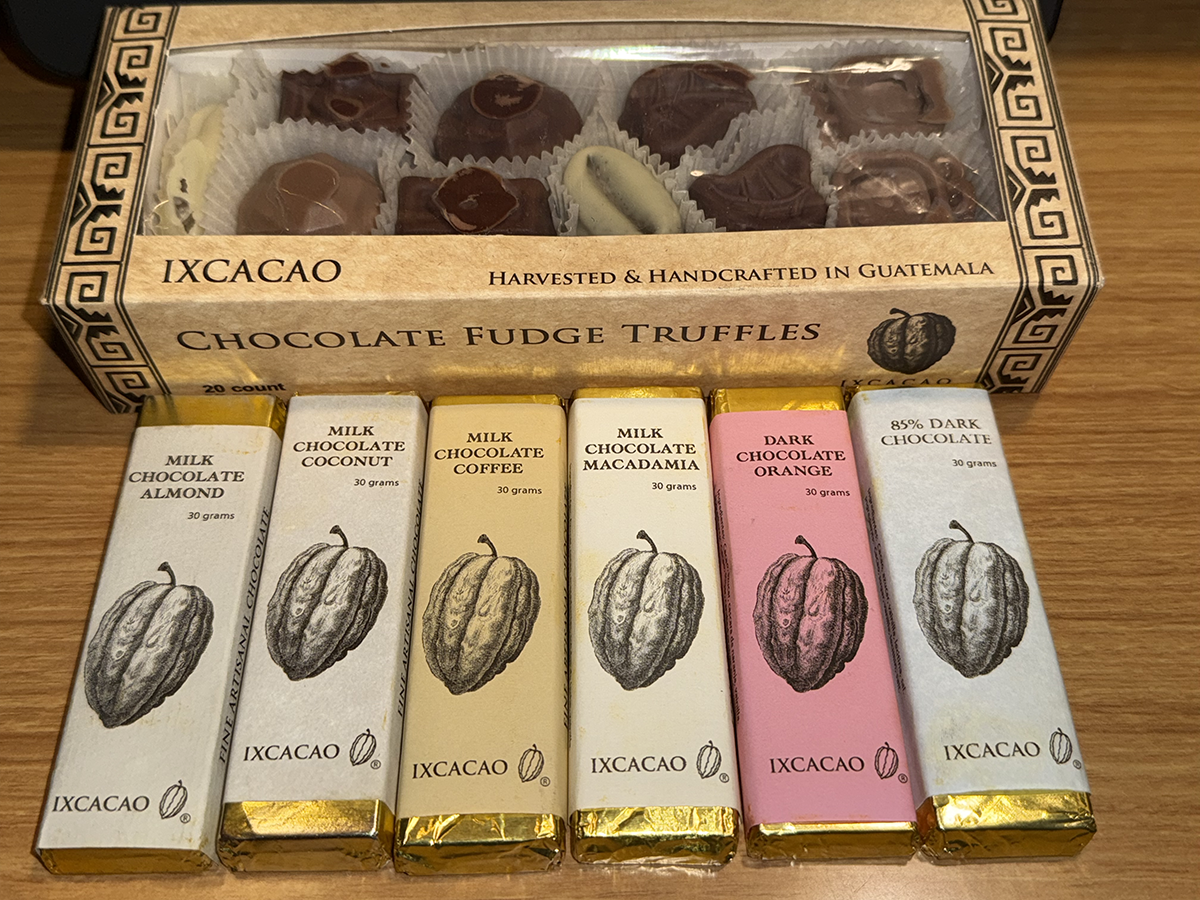
The bars themselves are appropriately wrapped in gold foil because as far as I’m concerned, they are representative of being worth their weight in gold for the quality of the chocolate. I ended up slow enjoying each bar (though I know that with chocolate made this way, consuming them as soon as possible is the best because that is when their flavor and texture is at its freshest). It was 5 months later when I finished the last bar; the 85% dark. It was the best 85% I’ve ever tasted and knew that it would’ve been even better when fresh. The bars themselves have a simple cacao tree design on them.
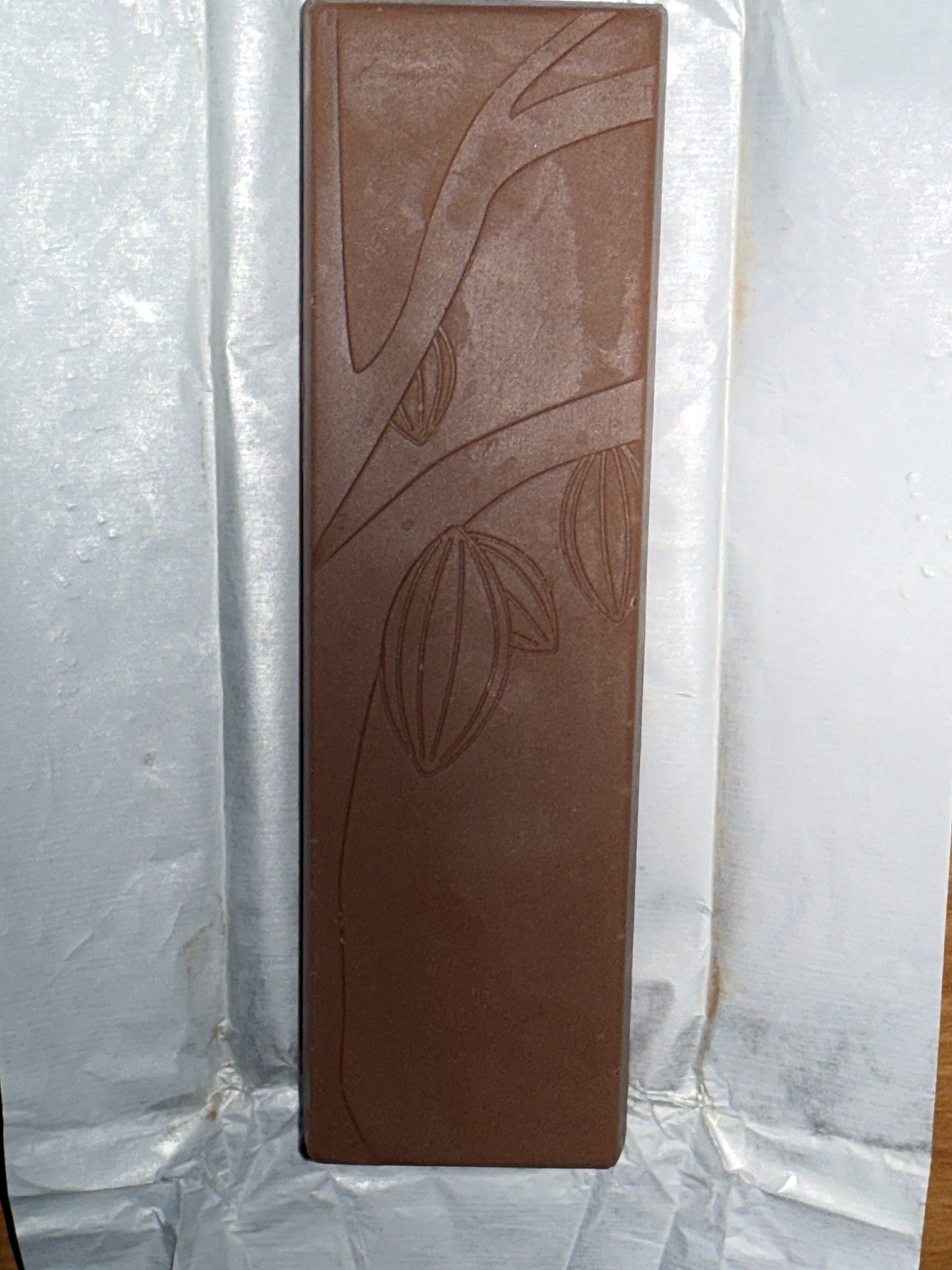
I’m usually not a fan of chocolate truffles, but these were exceptionally good and not overwhelmingly sweet (like if you were used to the ones from places like See’s Candies or Godiva). The maple walnut ones were collapsing due to the heat (more my fault since as mentioned above, it was during the summer when I couldn’t meet up with Sydney for several weeks, and she tried keeping them in a cool spot since refrigerating chocolates like this isn’t recommended since as Bob noted, they have a tendency to absorb the odors in the refrigerator that can affect their flavor). Bob also said the filling on this batch may not have been the best compared to the ones he made next (a process of him continually experimenting, iterating, and refining his product).
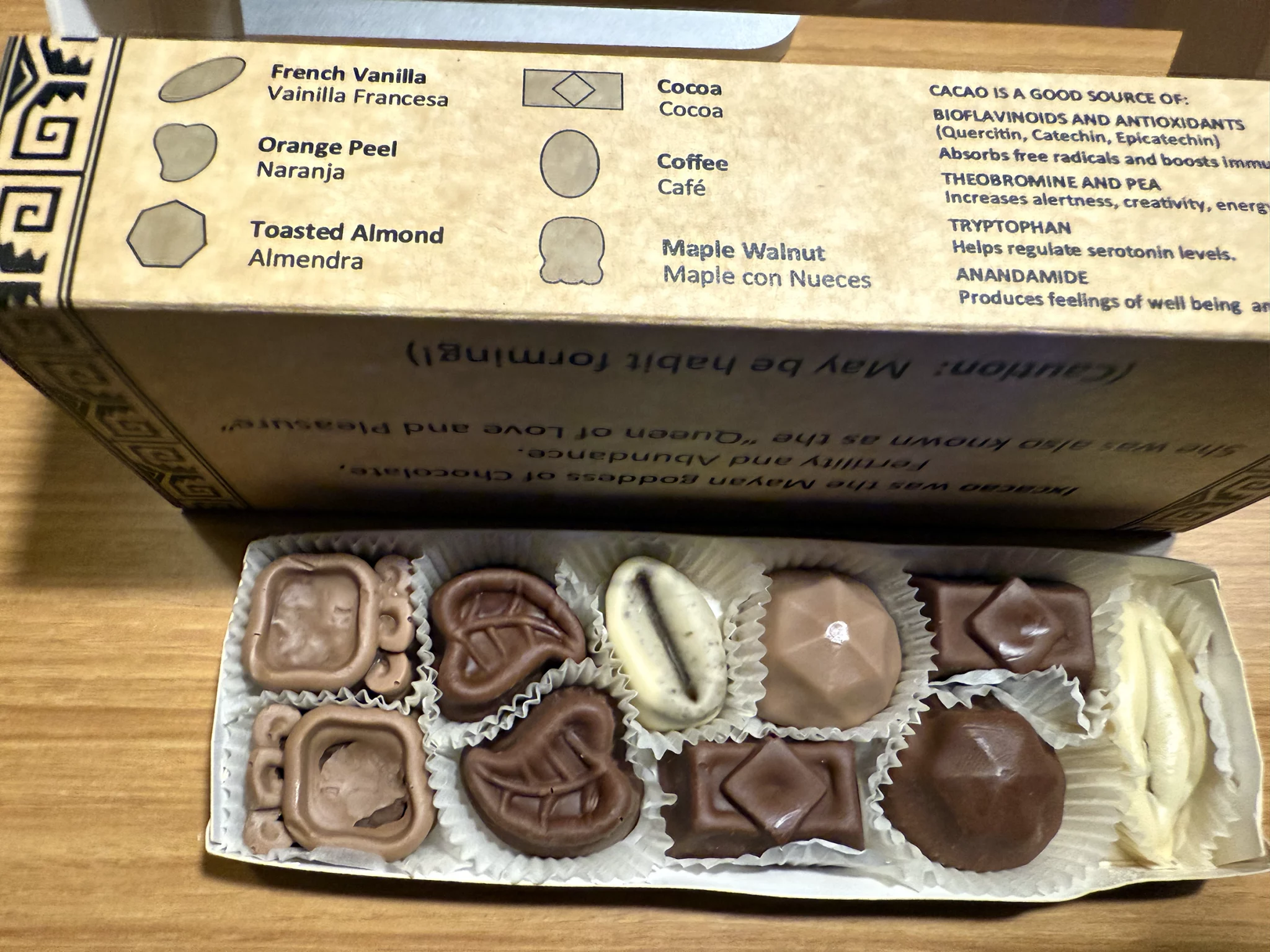
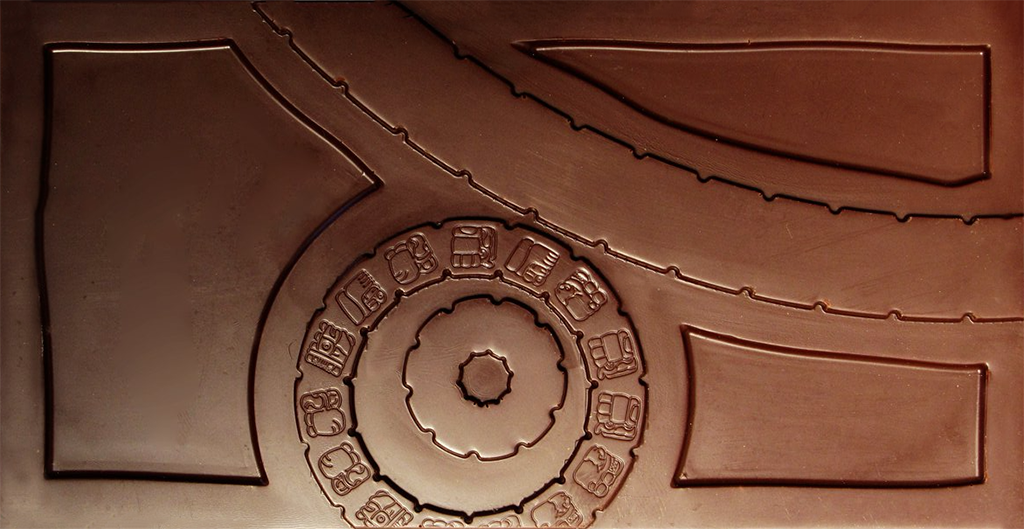
I also liked the simple design of the box (with its Mayan culture cues on it). Again, this respect and the significance is something I always appreciate in the design of products (and their packaging) even if that product happens to contain a consumable like a bar of chocolate. The bottom of the box also had a sense of humor to it (caution: may be habit forming!)
Bob had asked me to give me my honest feedback and critique about his chocolates. I know I’ve developed this reputation for being blunt (and I usually do that by qualifying at length, why). I’m equally self-critical (that contrarian/devils advocate aspect came about from my early forays into investing). I’m also very aware of “founders myopia” (where sometimes it is easy to miss the small things that others can see with those things you have created). I’m also not a chocolate professional by any stretch (and know feedback like this is highly subjective). But I do have this tendency towards chocolate/coffee that are of quality, made with care and an attention to detail.
I mentioned that I wanted to “kill two birds with one stone” by doing this in a writeup like this which others could then read if they came upon this/had this posting shared with them. As noted (in the disclaimer and multiple blog entries), I do not do sponsorships of any sort and anything I recommend, is because I personally enjoy it. A short writeup does not do what I am trying to convey justice either.
If I could sum it all up in a generalized tl;dr (too long, didn’t read it) fashion, this was some of the best chocolates I’ve ever had. The orange peel truffle was like a refined version of the chocolate covered orange peels (not pictured since those had melted together and didn’t look the best for photos; but still tasted good). It’s just that these truffles concentrated that flavor even more (the orange flavor had infused itself into the chocolate). I will say that this particular combination is what stood out for me the most including when it came to the bar version (see below).
Compared to the Manoa Chocolates bars (at least the ones that I’ve tried), these Ixcacao chocolates level of sweetness is on the lower end which isn’t a bad thing unless your taste is on the sweet side. I guess I see it as being able to experience more of the actual cacao flavor where you can taste those subtle flavors along with the texture (where you can let a small piece sit on your tongue and let it dissolve where sometimes, the flavor is even more intense). It’s been years since I’ve had chocolates from Minimal, but Ixcacao reminded me of that. IMHO, these could be competitive with many other chocolates that are marketed in the premium/gourmet category.
I know Bob has gotten similar feedback from others who have managed to taste his chocolates while visiting the area. I also know that after a point, there is this psychological aspect where you begin wondering if all of the positive feedback is just politeness, or if it is actually true. Being in senior management in the past, I was that “flattery will get you no where” guy. I believe in just providing an honest assessment (qualifying why as articulately as possible). Which is why those of us who are cognizant of this, end up reaching out to those who we know whom are able to be bluntly honest and to offer critiques (aka constructive feedback).
My most favorite ones ended up being the milk chocolate with coconut, dark chocolate with orange (see above), and 85% dark chocolate. My preference is strongly towards just plain dark chocolate bars so it says a lot when I include two that aren’t (and one of them also happens to be milk chocolate). I’m personally not a fan of nuts in chocolate and chocolate covered coffee beans (but I left those biases aside). The almond and macadamia ones as expected, have solid pieces of the nut in them (similar to a Hershey’s with almond bar or Hawaiian Host chocolate covered macadamia nut), while the coffee one had roasted beans in them (like chocolate covered coffee beans). For those who like this combination, the flavor of the chocolate is never overwhelmed by the nuts/bean.
I think for these with the nuts and bean, that if the bar itself had a larger surface area (such as a 60g bar), the distribution of the nuts and beans would be spread out adding to both texture and taste. Regardless, for those who enjoy this combination, these are definitely far superior (to a Hershey’s almond bar or Hawaiian Host chocolate covered macadamia nuts) because it’s not overpowered by sugar enhanced processed chocolate. As for the chocolate bar with the coffee beans, I usually break pieces of the bar by hand; doing that often caused the bean to go flying or breaking off separately (to be expected). Roasted coffee beans themselves are rather solid which is why they are normally just coated as individual pieces (to easily pop the whole thing into your mouth to crunch away at).
Brief tangent: Eating a roasted coffee bean has a muted flavor because that is how it is. It’s when the bean undergoes grinding where some of those oils are released leading to that distinctive aroma (and the actual grounds being subjected to appropriate temperature water during brewing, releases its full flavor). It’s this chemical reaction/sensitivities with cacao, coffee, teas, etc that has an impact on flavors. It’s why even though I enjoy coffee, chocolate covered coffee beans isn’t at the top of my list. However, I think a good experiment to try would be if there is way to add a finely ground high quality coffee into this chocolate where those oils infuse themself into that chocolate. I realize it isn’t that simple because of how coffee grinds tend to not mix well along with the chemical reactions involved (an actual science to all of this where it may need to be done a different way).
Calling any investors (or maybe not)…
Bob had also asked me earlier if I knew any investors that I could pass his info along to. Myself (as I learned), I had presumed from my own investing adventures, that I’d be able to at least touch bases with some of these individuals. But after spending nearly a month reaching out, I learned that foods (especially once you start getting into gourmet and highly perishable ones) is a very specialized sector for equity financing that was way out of mine/other investors (that I knew) league (I mainly kept myself in the tech arena).
I understood the supply chain logistics part though since I had some past experiences with cold chain ones when I did volunteer work in that area for around a year. With his location and the lack of high volume transportation for supply chain distribution running continuously, economies of scales is a problem (simply put, the costs cannot come down which means margins take a hit or those costs get passed on to the consumer).
Taking on equity financing (if you can even get past the pitch round) can also have downsides though with things like control and having to meet potentially unrealistic expectations. It is often times more of a headache when dealing with individuals you may not have a close relationship with. You also need to have a strong leadership team in place, solid/stable financials, be well versed with the business plan, sales projections, market place analysis, governance requirements, etc.
Finally (and this is the important one), this would go against Bob’s philosophical ideal of cooperation versus competition (I would take on equity financing only if certain key demands were met including majority control and operating under a form of cooperative business structure). In retrospect, something like this needs to be kept close to the vest because the people who are involved in the process of creating the final product are what makes it special.
Alternative avenues
It is hard to compete price wise when it comes to price conscious consumers (whereas those of us who are price elastic and willing to pay for high quality goods/services, are a much smaller percentage volume sales wise). This part is unfortunate because these would easily sell if they are both widely available AND price competitive. Again, I am writing this as someone who is clueless in this area of gourmet chocolates; I am just writing this from knowing this compares well to other premium chocolates I’ve tried that do great business. Thus for the time being, Ixcacao chocolates are like this hidden gem. At the same time, it is unfortunate more cannot experience this chocolate for themselves.
I do believe something like streaming, vlogging, blogging, etc could be an alternative avenue in terms of reach including networking with other content creators. As Bob mentioned in his last stream, he’s already experienced one past viral moment with something he had worked on. I honestly believe he has a knack for story telling in a podcast style format; I think he will be familiar with the Hawaiian method of passing wisdom down via “talk story”. It’s the main reason I’ve included that VOD in this entry (because it encapsulates all of this along with his chocolate making and the socially responsibly way he is doing all of this).
The latest samples
Several months ago in October 2025, Bob happened to have visitors (longtime friends he knew) that were going to return to the Big Island and he wanted to provide me some samples of chocolate he had made from several different farms that he was sourcing his cacao from as well as some cacao liqueur that he made. His story on his cacao liqueur was interesting for sure (more on that near the end). As for the chocolates, he explained the cacao came from 3 different farms from different regions of Guatemala (and were labeled with I, P, and K).
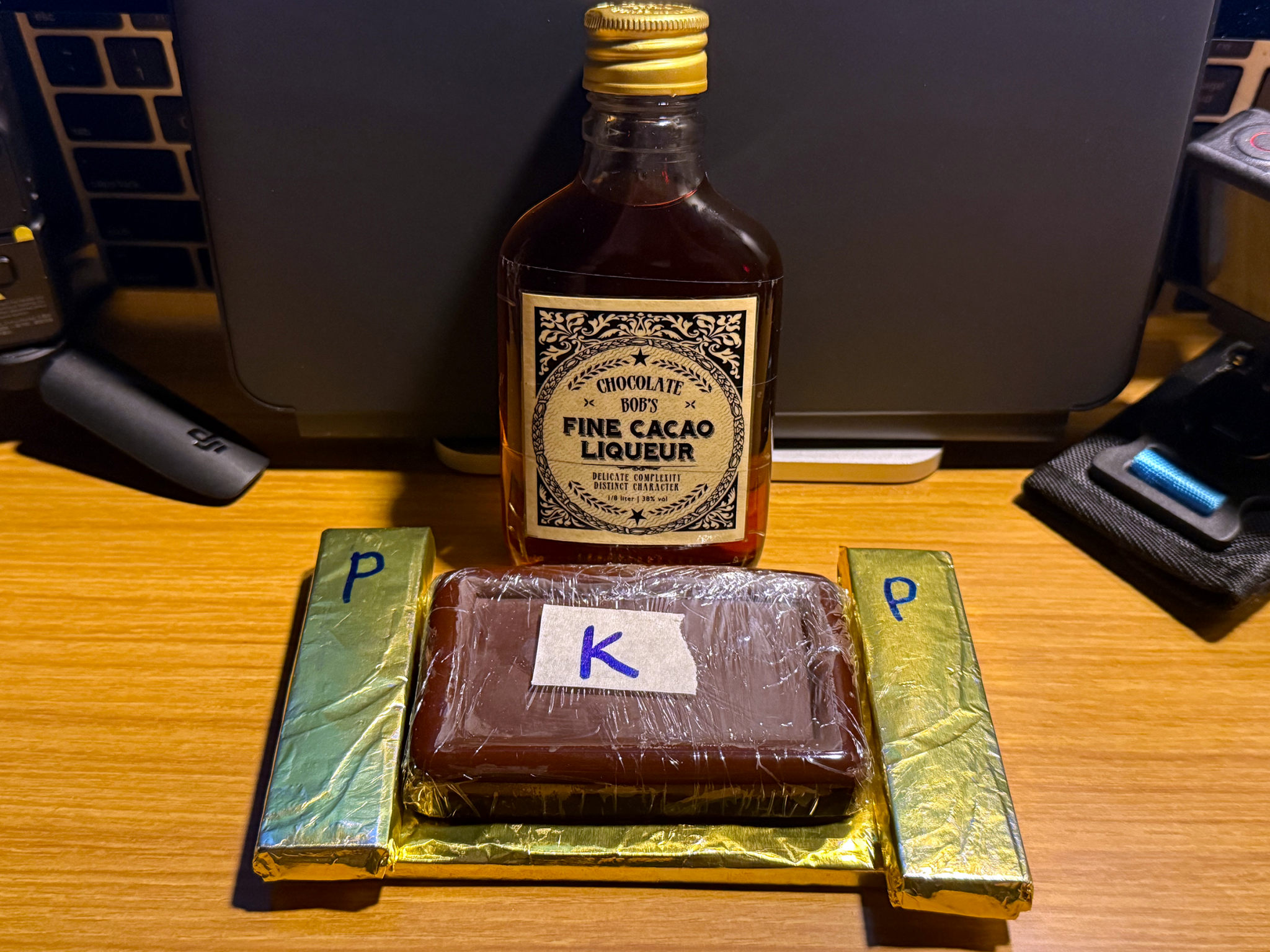
They were all 75% dark using the same recipe as far as roasting, refining, and conching. The ingredients were simple: cacao, sugar, and vanilla bean. The I (the bar sitting under the P and K) was from a farm called La Esperanza, which is close to a small town called San José el Ídolo. He noted these were from very new trees that were planted 3 years ago and the cacao was from their first years harvest. P was from a farm called Polochic which is the name of a river and delta that flows into Lake Izabal in Eastern Guatemala. Bob mentioned he has been working with them about 9 years and they have a nice flavor profile. The final was the bar labeled K which has cacao from a farm called Kampura (one that he’s had the longest relationship with at around 12 years). That bar made with Kampura is a huge slab (I’d be in chocolate heaven if they were all made this way).
I tried the Esperanza (I) first. For a 75%, it had the flavor of a bar that would normally be around 80%, just without that bitter aftertaste at that percentage. Out of all the chocolates I had tried from him, this one had the strongest immediate flavor. I say that not in a bad way; it’s just distinctively different because of how it stands out by comparison to the other chocolates. Bob mentioned this being the youngest farm/first harvest, that the consistency and flavor might not be there yet (but they’ve made really great progress recently).
I thought it was fine because I wasn’t expecting that flavor profile which is usually for chocolate at over 80%. Given that he made it as a much larger bar (maybe 100g versus the 30g stick sized ones), it had a nice but simple Mayan design on it (for me, such visual designs “adds” to the flavor and appeal).
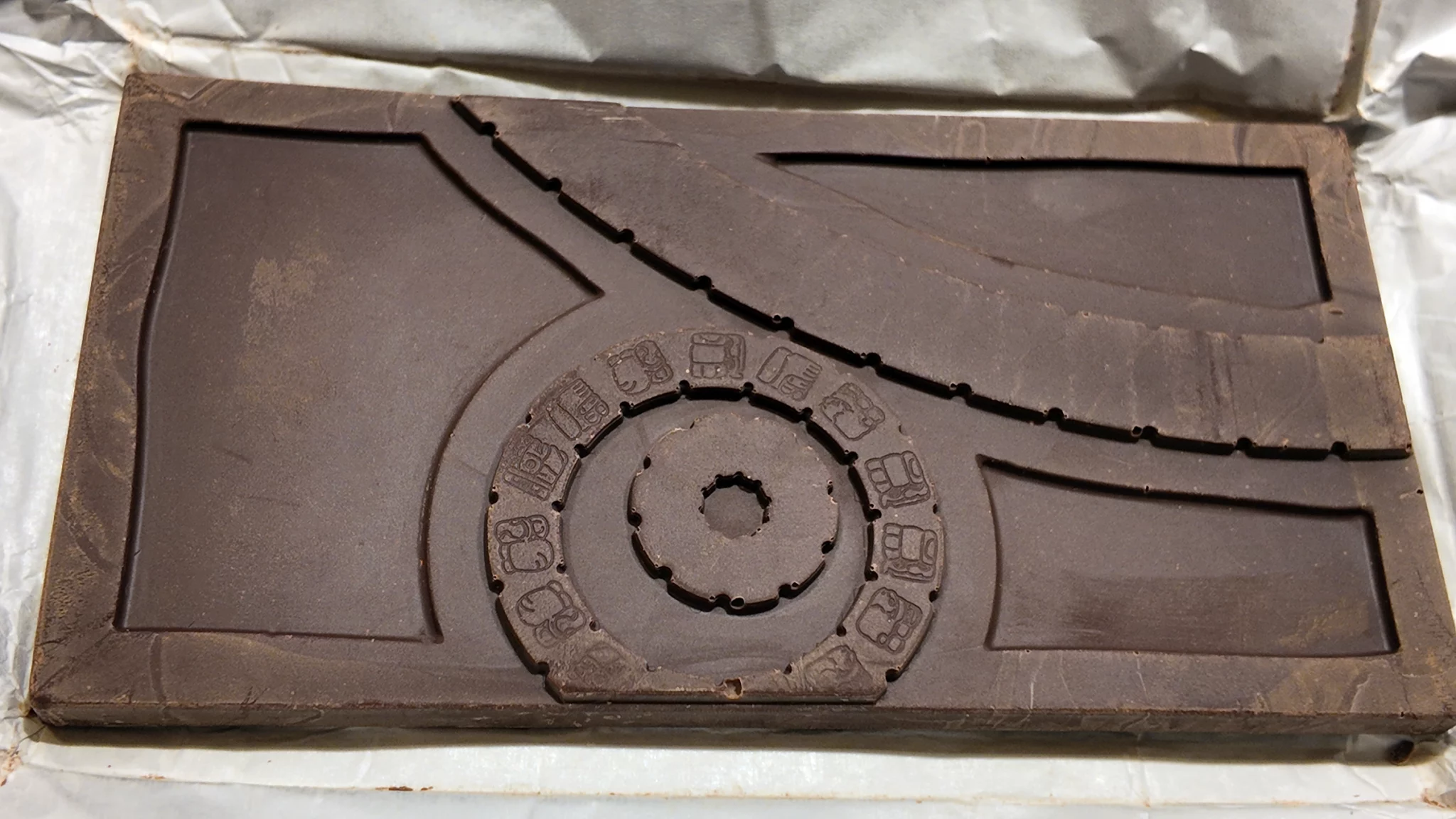
I then tried the Polochic (P) next. This one had that milder but also concentrated flavor; I don’t know how a real chocolate connoisseur would describe it but for me, it had this smooth and consistent flavor where you just want to have more (I rarely eat these smaller 30g premium chocolate bars in one sitting). Even a 60g bar which is normally 2 servings (half of the bar would be a single serving), I end up consuming them over the course of 6 different times (this 85g bar I also eat can last a week).
I tried the Kampura (K) last and had to cut through a small portion of it with a knife due to how thick that slab was. But that larger surface area lends itself to the texture and flavor (I am not sure if this will be impacted if it were in the smaller 30g form). Bob noted that Kampura is the “star of the show”. He mentioned they won 2 global awards in 2024 (the best cacao of Guatemala and one of the 50 best cacaos in the world). Upon sampling this bar in different chunks that I’ve cut off, its mild but concentrated flavor stood out from the first taste and remained consistent.
If I were to offer a comparison of this Kampura cacao by using something similar (but not completely analagous) in the Kona coffee world, it would be like drinking Peaberry (which are Kona coffee berries that contain a singular whole bean and therefore, have this highly concentrated flavor; they are the least common berry type when picked which is why it commands the highest price per pound/gram). When picked at their peak ripeness, properly roasted (which is a craft in itself) and then brewed, it’s a consistently smooth taste without bitterness (unless way too hot water is used and/or if the brew sits too long on the heating burner; this is just the nature of Kona coffee where it is more chemically and temperature unstable).
I also believe that it is Bob’s years of experience which gives his handmade chocolates, this very mild and subtle flavor that doesn’t have this strong aftertaste either. It’s this level of consistent care that highlights itself in the final product.
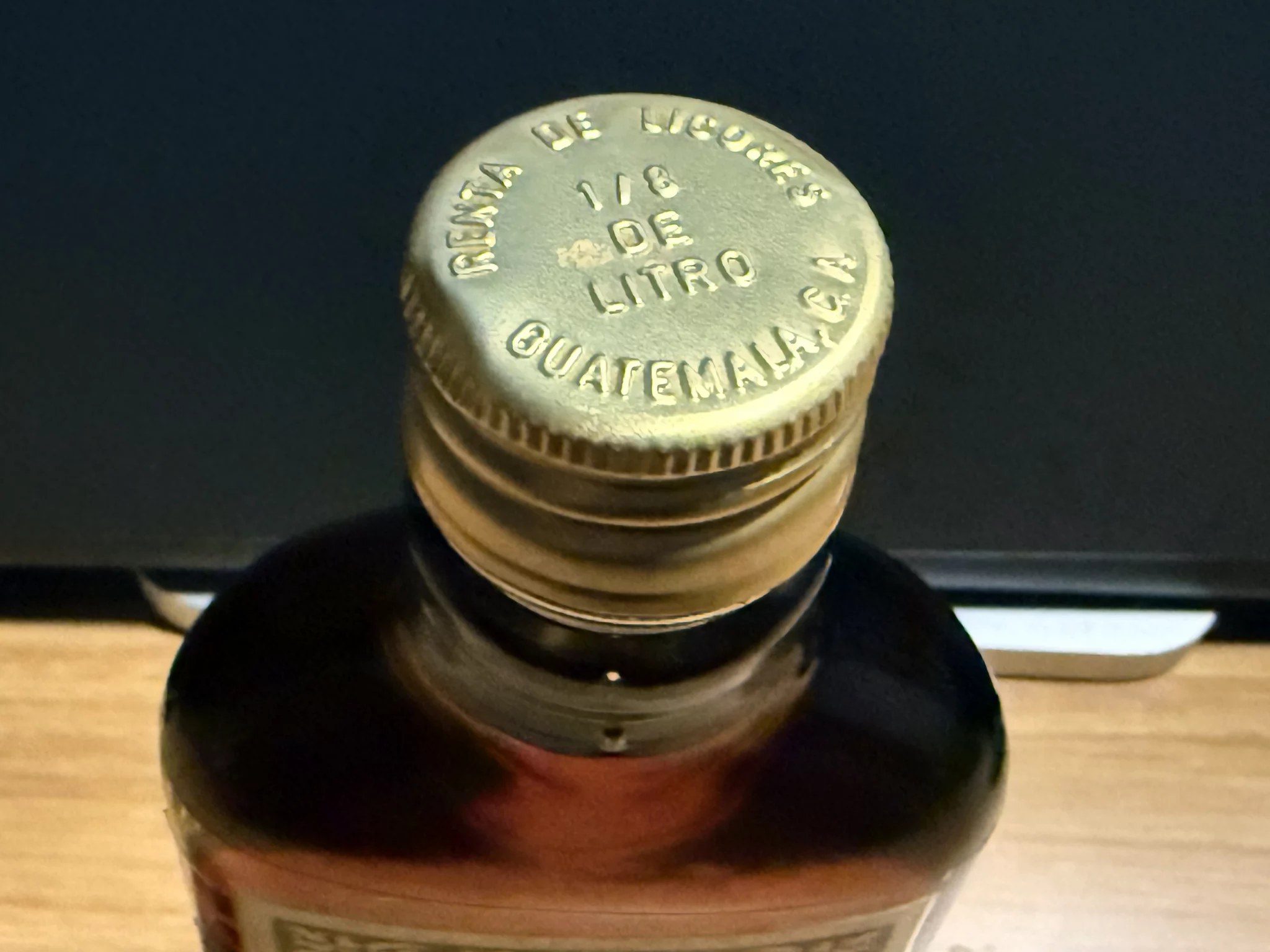
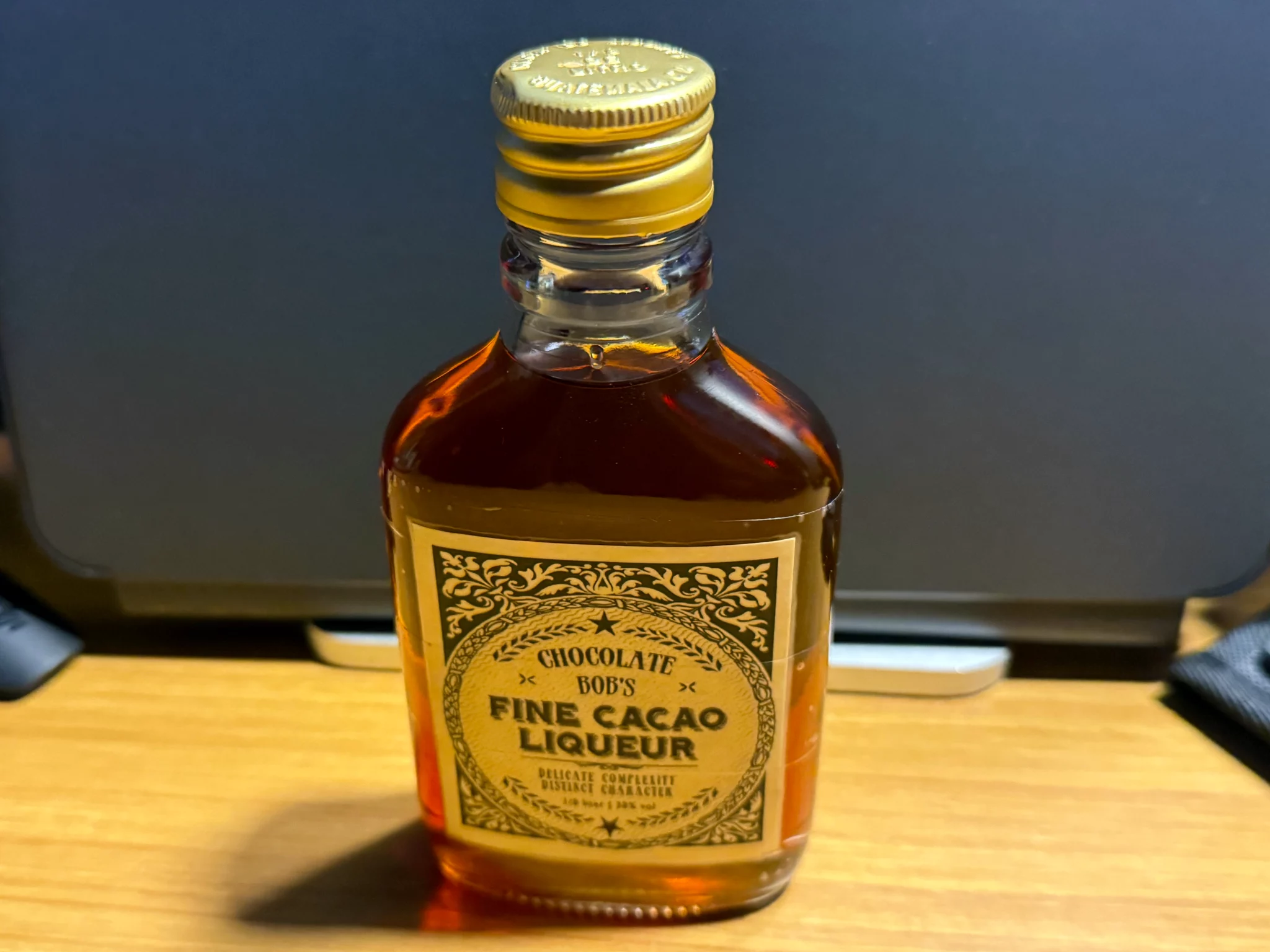
Finally, Bob also included a small bottle of his homemade cacao liqueur. I will just quote in full (with some minor corrections) what he had written:
Then there’s the cacao liqueur I make {which} took me 8 years to develop and master. I hosted a friend of a friend from the US for a couple weeks about 5 years ago. He was retired from 30 years in the beverage industry. Bars, warehouses, and production facilities around the world. I showed him a bottle of my cacao liqueur. The first thing he did was hold it up to the light and comment on the clarity and color. Then he opened it, smelled it, and sampled it. He quickly told me “You don’t know what you have here”. I said “I think I do, it took me years to figure out how to make it”. Then he looked at me and said “This is not the best cacao liqueur in the world”. I told him probably not, but it’s the best I was able to come up with. Then he said “This isn’t the best cacao liqueur in the world, it’s the ONLY cacao liqueur in the world. I’ve tasted everything there is and I’ve never found any that actually taste like cacao”. It really shocked me, I asked him how much he thought it would wholesale for the 750ml bottles I was making. He said at least $50 to $60 dollars a bottle with retail markups from 30% to 50% or even more for premium products like mine.
Because of my health related situation, I avoid drinking liquor/alcohol except the rare occasion of nihonshu and maybe something like a Kahlua cola. I’ve never been a heavy drinker previously anyway, just lightly on some social occasions or to try quality sake (and usually in a small ochoko). It also takes strong whisky for me to get drunk (it’s why I never got into drinking).
As of this writing, I haven’t yet tried it since I’ve been reading to get a general idea of what existing cacao liqueur products are like before I open this bottle and pour a small amount into a shot glass (to take photos of and then to try) because I wouldn’t have a baseline to really describe it (I will update this in the future once I try it). But just this small bottle exudes something special about it. Bob mentioned he’s refined it a bit more (from this particular batch).
Closing
For myself, I felt a bit privileged that I was even able to have these in hand to try. His Ixcacao brand of chocolates (the ones I was able to sample), would (in my non-professional taste testing opinion) hold their own in that premium category. If I had just did only a writeup reviewing the chocolates themselves, this would’ve been really short and would not have done the product actual justice without highlighting the person who makes them (who IMHO, deserves this artisan designation).
By extension, this also applies to his suppliers (the farms he works with), and all of the workers who are part of this process. I often time use this term “GIGO” (garbage in, garbage out). Outside of the recycling and upcycling arena, if what goes in is garbage, what comes out at the end is garbage. The base materials/ingredients need to be of quality for the final product to exude that same trait. Furthermore, his sources of cacao share the same holistic philosophy of being socially responsible and fostering an environment of interdependence which benefits all.
But what is even more gratifying, has been having these brief opportunities to converse with someone that has had this vast life experiences but is very humble and just an overall terrific person (because all of those positive attributes, are what makes whatever Bob creates, exude those same traits).
Thank you and mahalo Bob for allowing me this opportunity to sample your creations!